June 22, 2026

Innovative Fluid Control Solutions Using the Max Adaptor

Female compression fittings offer a simple and dependable method for connecting pipes and tubing. They eliminate the need for solder or welded joints. This overview covers the function of female compression fittings, breaking down how the compression nut and ferrule produce a tight seal. It also emphasizes their importance in both plumbing and HVAC applications.


Selecting high-quality pipe fittings can greatly limit energy losses. This, in turn, prevents refrigerant or water leaks, which can harm the environment. HVAC systems, which include components like compressors, condensers, expansion valves, and evaporators, depend on robust connections. Choosing the appropriate female compression fitting and compatible materials—such as brass, copper, stainless steel, PVC, or PEX—is essential for long-term system performance.

For plumbing work, PEX or PVC with compression fittings are frequently used for their ease of service and low heat exposure. In comparison, refrigeration lines require fittings that can handle thermal fatigue and keep a seal across a wide temperature range. InstallationPartsSupply.com and its product lines cater to these needs, stocking common sizes and parts such as ferrules and compression nuts.
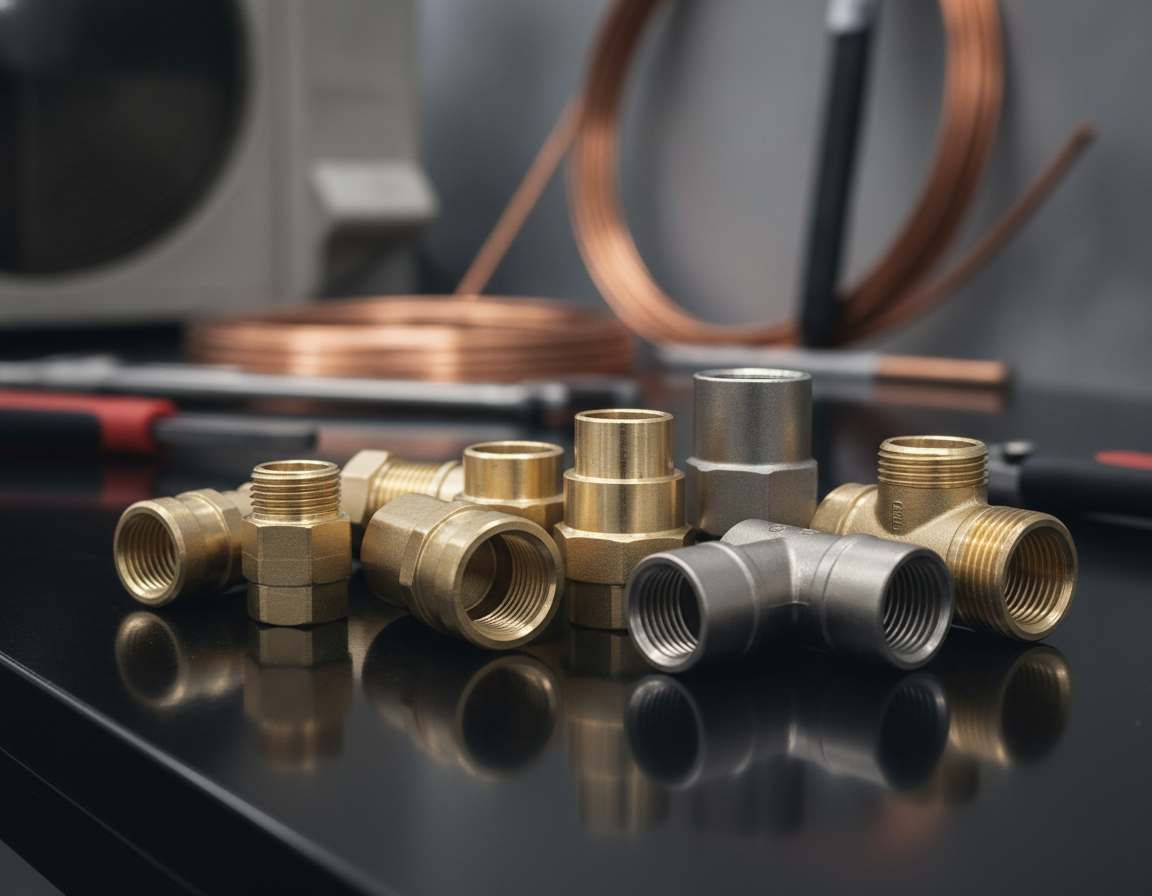
Female Compression Fitting

Key Takeaways

  • Female Compression Fitting uses a compression-nut and ferrule assembly to seal without soldering.
  • Using the proper fitting material—brass, copper, stainless, PVC, or PEX—limits corrosion and failure.
  • Well-matched fittings help cut energy loss and reduce refrigerant or water leaks in HVAC and plumbing systems.
  • Compression fittings guide resources and suppliers like InstallationPartsSupply.com support part selection.
  • Check ferrules and tighten per manufacturer torque to maintain a long-lasting seal.

Understanding HVAC And Plumbing Uses For Compression Fittings

Compression fittings join pipes and tubing without solder or welding. They are commonly used on copper, PEX, PVC, and stainless lines where heat or flame is best avoided. Many professionals source parts from Installation Parts Supply to help maintain consistent quality and fit.

What A Compression Fitting Is And How It Works

A compression fitting works with a nut and a ferrule olive pressed against the pipe by the fitting body. The tightening action compresses the brass ferrule or sleeve, which locks onto the outer pipe and forms a seal. This construction helps answer the common question of what is a compression fitting by showing how mechanical compression creates a leak-tight joint.

HVAC Vs Plumbing Fittings: Key Differences

HVAC fittings are expected to withstand refrigerants, wider temperature swings, and thermal fatigue. Plumbing fittings usually handle potable water, wastewater, and pressure from building systems. In HVAC vs plumbing fittings, selection depends on media, service temperature, and pressure ratings.

HVAC systems like split systems, VRF, and rooftop units often use copper fittings and brazed joints for refrigerant lines. Plumbing work favors PEX compression and PVC for drains, where solvent welds or crimp systems are common.

Common Materials Used: Brass, Copper, Stainless Steel, PVC, And PEX

Copper fittings offer excellent thermal conductivity and corrosion resistance. Brass parts, including the brass ferrule, resist wear and are common in many compression fittings. Stainless steel works well in corrosive or high-pressure environments.

PEX compression fittings are commonly used for domestic water lines because it manages freeze-thaw cycles and is flexible. PVC is commonly used as a low-cost option for drains and certain chilled-water circuits when pressure is low.

Fitting Material Primary Use Strengths Drawbacks
Copper Material Cooling lines and drinking-water systems Conductive, durable, solderable Higher cost, prone to mechanical damage
Brass Compression fittings, nuts, and ferrules Easy machining and corrosion resistance May react with incompatible metals
Stainless steel components Harsh, high-pressure environments Extremely durable and corrosion-resistant Costlier with tougher fabrication
PEX Tubing Domestic water systems Flexible, freeze-resistant Requires compatible PEX compression fittings
PVC Material Drain, low-pressure chilled water Inexpensive, easy to install Limited in hot or pressurized applications

Fitting Selection, Energy Efficiency, And Leak Prevention

Matching the fitting correctly limits leak risk and maintains system pressure. Across cooling circuits, a poor joint can release refrigerant and lower efficiency. Tight seals and matched materials cut maintenance and lower energy waste.

Matching the right ferrule type and matching copper fittings or PEX compression hardware reduces the chance of galvanic corrosion and thermal fatigue. This method extends service life and keeps HVAC and plumbing systems running efficiently.

Understanding Female Compression Fittings

A female compression fitting connects and seals a pipe or tube end when a nut compresses the ferrule olive against the fitting body. This design enables tight connections without soldering, making it common in plumbing and HVAC. Unions and adapters allow quick disassembly for service or instrument changes.

Female Compression Fitting Definition And Configurations

A typical assembly includes a female compression nut, a ferrule olive, and the fitting body. The nut connects to the fitting body and compresses the ferrule to grip the tube. Many installations rely on unions, straight fittings, or elbow bodies to adapt direction and access during maintenance.

Choosing Compatible Materials

Brass and copper are commonly used for refrigerant fittings and hot-water lines due to their ability to withstand thermal cycles and resist deformation. Stainless steel works well in high-pressure or corrosive environments. PEX and PVC are often used in condensate and domestic water runs, but they require proper inserts or specific ferrules for secure joints.

Plumbing, HVAC, And Instrumentation Uses

In standard plumbing work, female compression fittings link stops, valves, and supply lines without solder. Across HVAC service applications, technicians use them on refrigerant fittings between compressor, condenser, and evaporator where service access is critical. Serviceable gas and instrument lines frequently use compression parts for leak-tight, serviceable connections.

Comparing Female Compression Fittings, Male Fittings, And Adapters

Female fittings are designed to accept a male end and form the receiving thread, while a 3 8 Male Compression Fitting provides that mating male component for tubing or ports. A 3/8 Valve Adapter allows technicians interface service valves and gauges to the system. Choosing matched materials prevents galvanic corrosion and keeps joints reliable under pressure and thermal change.

Assembly Part Usual Material Typical Use Practical Note
Female compression nut Machined brass Plumbing supply lines, valve connections Replace if rounded or cracked
Ferrule sleeve Brass or stainless steel Creates seal on copper, brass, some PEX Often not reusable after compression
Body of fitting Machined brass or stainless Instrumentation and HVAC refrigerant fittings Confirm refrigerant and pressure compatibility
3/8 Male Compression Fitting Brass, copper Connecting small tubing to female ports Confirm thread and seat match
3/8 valve adaptor Brass material Gauge and manifold connections Confirm sealing components before use
Installation Parts Supply Material options vary Supplier for compatible kits and replacement parts Choose compatible ferrules and nuts for longer service life

Fitting Types, Sizes, And Adapters For HVAC And Plumbing Work

This part explains the various fitting types, sizes, and adapters essential for plumbing and HVAC projects. Contractors select couplings, elbows, unions, and adapters to manage line routing, component isolation, and service access. The selection of these components significantly impacts system performance, including pressure rating, temperature limits, and reliability.

Compression couplings and unions allow the creation of removable joints for maintenance and testing. Couplings are best suited to straight connections, while compression unions are helpful for components that need to be disconnected without disrupting the line. For small runs, a 3/8 Compression Coupling is often used in instrumentation and refrigeration applications.

Elbows and adapters are used for tubing routing around obstacles and for connecting different types of fittings. A 3 8 Male Compression Fitting helps connect to a female port or adapter, facilitating the integration of service valves and gauges. Installation Parts Supply catalogs offer a wide range of these components, making possible quick access on job sites.

Choosing the right size is critical, depending on the tube’s outside diameter and the ferrule and nut set. Check that the female compression fitting size matches the tube OD to prevent leaks. On 3/8″ tubing, verify ferrule compatibility and torque specifications. Also check the system’s maximum pressure and temperature ratings before making a final selection.

Specialized parts like the Max Adaptor and 3/8 Valve Adapter are designed for connecting gauges, service ports, and small refrigerant lines. These fittings streamline the process of charging and diagnostics in HVAC systems. In compact HVAC systems, a 3/8 Valve Adapter is commonly used to link manifold hoses to service valves on compact systems.

Choosing material involves a trade-off between durability and corrosion resistance. Stainless steel is tough and corrosion-resistant, making it suitable for harsh environments. Brass and copper are good for refrigerant circuits and heat transfer lines due to their balance of machinability and corrosion protection. PVC and PEX are suitable for low-pressure condensate and water lines but not for high-pressure refrigerant service.

Fitting sustainability is affected by leak prevention and recyclability. Properly fitted metal fittings reduce refrigerant emissions and can be recycled at the end of their life. Buying quality parts from reputable suppliers reduces failures and minimizes long-term environmental risk.

The comparison below helps buyers choose between common options by application, pressure, temperature, and reusability.

Type Of Fitting Primary Application Typical Max Pressure Typical Temperature Range Reusable Status
Brass compression coupling Instrumentation, small water lines, refrigerant May reach 3,000 psi depending on rating Typical range from -65°F to 250°F Limited reuse if the ferrule remains intact
Compression union in brass or stainless Disconnect points for maintenance As high as 2,500 psi Approximately -65°F to 300°F Good reuse potential for service access
Small 3/8 compression coupling Instrumentation, refrigerant lines, and small plumbing runs System dependent; confirm rating Confirm material temperature rating Some reuse possible, but service replacement is common
3/8 male compression fitting Adapter for gauges and service valves Refrigerant-rated when made and specified correctly Appropriate for typical HVAC temperature cycles Reusable if undamaged
Specialty Max Adaptor Special service coupling for gauges and valves Designed for higher service-tool demands Designed around HVAC service cycles High reuse because it is service-focused
PVC and PEX fittings Condensate and low-pressure water Low rating and unsuitable for refrigerant Commonly around 32°F to 140°F Reusable only in some applications with UV limits

Before buying, check Installation Parts Supply or other reputable distributors for part numbers, material options, and pressure ratings. Confirm that the chosen 3/8 Valve Adapter or Max Adaptor matches both the tubing OD and the service fitting type to avoid mismatches on site.

Compression Fitting Installation, Best Practices, And Maintenance

Proper compression fitting installation starts with clean, square pipe ends and the right parts. On HVAC refrigerant circuits, use copper and brass. On chilled water or condensate runs, PVC or PEX is best. Always check manufacturer specs and ASME B31.5 to minimize energy loss and leaks.

Installing compression fittings correctly

1. Start by cutting and deburring the tube to a square face. 2. Next, slide the nut and ferrule onto the pipe in that order. 3. For PEX or thin-wall plastic tubing, insert pipe inserts to keep the tube round before assembly. 4. Finger-tighten first the nut, then use the two-wrench technique to finish the joint.

Recommended tools and techniques

Apply the two-wrench technique to hold the fitting body and turn the nut to prevent tube twist. Follow tightening guidance from the fitting maker or Installation Parts Supply when available. Many installers snug by hand, then add a limited number of wrench turns.

When pipe inserts are needed

Pipe inserts are commonly required for soft plastic tubing like PEX or thin-wall PVC to prevent ovalization and ensure a leak-free seal. Avoid inserts in solid copper or thick-walled metal tubing, where inserts can interfere with proper ferrule compression.

Common errors and ferrule removal

Avoid tightening too little or too much. Too little tightening can cause leaks; over-tightening deforms the ferrule and can make ferrule removal difficult. Ferrules are generally single-use; plan to replace them when disassembling a joint.

Ferrule removal steps

Start by isolating the supply and releasing pressure. Stabilize the fitting body with one wrench while loosening the nut with a second. Remove the nut and slide out the ferrule. When the ferrule is seized, apply penetrating oil, use a ferrule puller, or carefully cut the ferrule off without nicking the pipe.

How to install a 3/8 Valve Adapter

For compact 3/8″ service connections, prepare the tubing the same way and follow the two-wrench technique. Several steps for installing a 3/8 Valve Adapter mirror larger fittings but require careful attention to torque guidance to avoid crushing the tube or the adapter threads.

Inspection plus maintenance

Once the system is pressurized, inspect joints for weeps and tighten slightly if needed. Add routine checks for corrosion and thermal fatigue, mainly on refrigerant circuits. Avoid placing compression joints where vibration will loosen them over time.

Installation Step What To Do Tip
Prep Work Cut square, deburr, clean pipe Use a quality tubing cutter and deburring tool
Fit-Up Install the nut and ferrule before inserting the tube Install pipe inserts in soft plastic tubing
Tighten Tighten by hand, then finish with two wrenches Use the maker’s torque recommendation
Testing Pressurize the system and look for weeps Look for slow weeps and re-torque slightly if safe
Service Inspect regularly, replace ferrules when disassembled Have spare ferrules and nuts available from Installation Parts Supply

Summary

Using the correct compression fitting matters for plumbing and HVAC work. The selected material, whether brass, copper, stainless steel, PVC, or PEX, must fit the service type. This ensures reliability and extends system life. Proper parts and installation can significantly reduce energy losses and refrigerant leaks, preserving performance and environmental health.

Compression fittings create a leak-free, solder-free solution. They rely on a nut, ferrule, and body. To help achieve a leak-tight connection, follow these steps: square-cut and deburr the tubing, use the two-wrench technique, and replace ferrules when reused. These methods guarantee long-lasting, leak-tight connections in various applications, from copper piping to instrumentation.

For particular installations, such as 3/8″ lines, 3/8 Compression Coupling, or 3/8 valve adapters, be sure to match size and pressure ratings to the task. Quality components from trusted suppliers are key. An Installation Parts Supply guide can assist in finding compatible fittings and adapters. Regular maintenance and proper selection preserve system efficiency and compliance.

To summarize, dedicating time to material selection and correct assembly is important. This supports durable, leak-free connections. It allows for optimal performance, fewer repairs, and less environmental harm.

Why Do Online Sellers Choose Kole Imports for Wholesale Inventory?

What Makes Kole Imports One Of The Best Wholesale Companies For Resellers?

Kole Imports is widely regarded as a highly beneficial wholesale partner by many resellers since it offers an impressive selection of wholesale goods that can be sold through e-commerce platforms, retail outlets, digital marketplaces, and various other resale channels.

What Is A Wholesale Company?

A bulk distributor sells products in bulk quantities directly to commercial operations instead of targeting individual consumers.

Resellers typically acquire their inventory from these wholesalers and then sell those goods through retail channels.

Wholesale enterprises play an important role in assisting businesses to:

  • Source needed inventory
  • Expand their product offerings
  • Manage and optimize inventory costs
  • Support long-term business growth

Kole Imports Wholesale

What Products Does Kole Imports Sell?

Kole Imports stocks inventory across multiple distinct categories, including:

  • Home goods
  • Toys and novelty goods
  • Seasonal decorations and goods
  • Gifts and novelty presents
  • Kitchen utensils and tools
  • Cleaning supplies
  • Health and beauty items
  • General merchandise

This immense variety empowers businesses to efficiently source multiple product types from a single dependable supplier.

Why Product Variety Matters

Resellers often seek suppliers with diverse inventory because product diversification can effectively:

  • Reduce overall business risk
  • Reach a wider pool of customers
  • Test out new categories
  • Increase potential revenue opportunities

Businesses that depend solely on a single product category may be far more vulnerable to unpredictable market fluctuations.

Who Can Buy From Kole Imports?

Wholesale inventory from this supplier may be highly suitable for:

  • Ecommerce businesses
  • Marketplace sellers
  • Brick-and-mortar retail stores
  • Discount stores and liquidators
  • Convenience stores
  • Flea market vendors
  • Startup resellers just getting started

Common Questions Answered

Does Kole Imports Function As A Wholesaler?

Yes, absolutely. Kole Imports provides wholesale merchandise specifically intended for resale businesses.

What Industries Use Wholesale Suppliers?

Retail, digital ecommerce, discount retail, convenience stores, and specialty shops frequently source their essential inventory from wholesalers.

What Makes Inventory Variety Essential For Reselling?

A diverse inventory enables businesses to offer more products and actively pursue additional revenue streams.

Final Thoughts

Businesses seeking wholesale products often prioritize suppliers that offer broad inventory selections, multiple product categories, and viable opportunities for business growth.

These critical factors make wholesale sourcing a cornerstone of many successful resale operations.

Ground Plug Adapter vs Extension Cord with Ground: Which Is Safer?

The grounding outlet adapter is a small but important device for proper electrical use in homes, workplaces, and travel kits. This guide covers benefits, installation, testing, sourcing, and compliance for consumers and B2B buyers in the United States. It also details when a grounding adapter or outlet ground adapter is appropriate, and how a ground plug adapter or grounding adaptor plug is different from a basic pin-shape travel adaptor.

In the United States, standard mains power is 120V at 60Hz, with common Type A plugs using two flat parallel blades and Type B plugs adding a grounding pin. A travel adaptor merely changes the physical plug shape and does not convert voltage or frequency. By contrast, a voltage converter or transformer actually changes voltage and is limited by its amp or watt rating. A dual-voltage appliance marked INPUT: 110–240V generally needs only a travel adaptor in the U.S., but a single-voltage device outside that range requires a suitable transformer or converter.

This guide is designed for U.S. homeowners, travelers, IT professionals using high-efficiency GaN laptop chargers, and procurement or OEM teams that specify grounded adapters for product lines and travel kits. Across the guide, readers will find practical steps for choosing a dependable grounding adapter and checking outlet safety before using high-wattage devices.

Why Grounding Is Important For Electrical Safety And High-Wattage Devices

Grounding prevents stray electricity from accumulating on metal enclosures and device chassis. A Grounding Outlet Adapter provides a low-resistance path back to earth. That path allows fault current to travel away from people, electronics, and sensitive internal components. It helps reduce the risk of shock and prevents voltage from stressing insulation, which can lead to heat, arcing, or fire.

High-wattage chargers, such as modern GaN laptop adapters rated 65W to 240W, carry more energy and must manage small residual currents safely. A Grounded Adapter directs those stray currents to earth rather than allowing them to collect on a metal case. That design reduces heat buildup and lowers the chance of insulation breakdown when the device is under heavy load.

Two-prong, ungrounded plugs provide live and neutral only. They are acceptable for many double-insulated items and low-power gear under 20W for short-term use. However, they can create real safety risks when used permanently with high-wattage equipment. Devices that draw higher power or use metal enclosures should use a Grounding Plug Adapter or a proper three-prong grounded connection.

Some users choose a Ground Lift Adapter to eliminate ground loops or hum in audio setups. Although it can help diagnose noise problems, it also disables the main grounding safety feature. Ground lift adapters should be used only as a temporary troubleshooting step, with full awareness that shock and fire risks are increased.

Grounding Adapters

Regulatory bodies such as UL, FCC, and CE require grounded designs for many high-power devices sold in the United States and abroad. Compliance is important for market access, warranty coverage, and insurance claims after loss. Using a three-prong Grounding Outlet Adapter on a circuit that is not truly grounded may affect warranty coverage and could influence homeowner insurance if a fault causes damage.

Long-term safety depends on upgrading two-slot outlets to properly grounded three-prong receptacles by a licensed electrician. This avoids relying on temporary solutions such as cheater plugs, improvised adapters, or unapproved Grounding Adapters. It improves protection for both users and connected equipment.

  • How grounding prevents shock: sends fault current to earth rather than allowing it to pass through a person.
  • How grounding limits overheating: prevents voltage buildup that accelerates insulation failure.
  • When to choose a grounded solution: for laptops, GaN chargers 65W+, and other high-wattage devices.

Grounding Outlet Adapter Types, Components, And Common Names

Manufacturers and suppliers often use different names for the same product. When shopping, search for terms such as Grounding Adapter, Ground Plug Adapter, and Grounding Adaptor Plug. Other common names include Ground Lift Adapter, Grounding Plug Adapter, Grounded Plug Adapter, Ground Adapter, Grounding Outlet Adapter, Grounded Adapter, and Outlet Ground Adapter.

Product labels are not always clear and can sometimes be misleading. A Ground Adapter for travel might just change pins without a true earth connection. On the other hand, a Grounded Plug Adapter suggests a dedicated earth conductor tied to the device’s chassis. The term Grounding Adaptor Plug is often used for items that restore a ground to older two-slot receptacles.

Physical plug standards are important for fit and safety. In the United States, most homes use NEMA 5-15 in two- and three-prong forms. Travel items reference Type A and Type B for North America. Europe uses Schuko Type E/F, the United Kingdom uses BS 1363, and Australia/New Zealand use AS/NZS 3112. Choose an adapter that matches the local plug standard and ensures the earth path remains intact.

Electrical ratings define what the adapter can safely handle. Review voltage and current specifications carefully. Typical U.S. household gear runs at 120V/15A. Higher-load appliances and some powerful chargers may require ratings of 16A to 20A. Insulation class also matters. Class I devices depend on a protective earth. Class II devices are double-insulated and do not use a ground.

High-efficiency GaN chargers and other high-power supplies may operate at elevated temperatures. Confirm the adapter’s thermal and current capacity before pairing it with a 100W+ charger or heavy-load appliance. A Ground Plug Adapter with an undersized rating may overheat, soften, or fail during sustained use.

Inspect internal grounding features before use. A proper device will have a physical earth pin or grounding tab tied to the internal chassis or ground conductor. Test continuity from the earth pin to the ground lug if possible. Manufacturers such as Wecent and other ISO9001 factories may publish continuity and low-resistance thresholds for grounded adapters.

Aspect What to check Safety reason
Product naming Ground Adapter, Grounded Plug Adapter, Grounding Adaptor Plug, Outlet Ground Adapter Multiple names can mean the same function or different safety levels; read specs not just labels
Plug type NEMA 5-15, Type A or B, Schuko E/F, BS 1363, or AS/NZS 3112 Ensures mechanical fit and correct earth pin placement for local sockets
Electrical rating Voltage and current ratings suitable for the device load Proper ratings help prevent overload, overheating, and adapter damage
Protection class Class I grounded vs Class II double-insulated Helps avoid using an ungrounded adapter with equipment that needs earth protection
Earth continuity Earth pin or grounding tab with low-resistance continuity Verifies fault current can travel safely and trip protection
Thermal Rating Heat-rated housing materials and adequate current-carrying parts Prevents melting or internal damage under sustained high loads

Use simple tests and spec checks before relying on any grounded accessory. A clearly marked Grounded Plug Adapter or Outlet Ground Adapter can be a good starting point. Confirm that the earth pin has continuity and that the voltage, amperage, and thermal ratings match the connected device.

How To Check Outlet Grounding And Adapter Safety Before Use

Before plugging in a high-draw device, perform a few simple checks to ensure safety. Simple tests can uncover wiring faults and help determine whether a Grounding Adapter or Grounding Outlet Adapter is appropriate. If you are uncertain about the result, stop and contact a licensed electrician.

Testing Tools For Verifying Grounding

A receptacle tester can quickly show common outlet wiring patterns. The tester lights indicate common faults like open ground, open neutral, or reversed hot/neutral. Always refer to the tester manufacturer’s legend for accurate interpretation.

Use a digital multimeter to confirm the tester’s findings. Measure voltage between hot and neutral, hot and ground, and neutral and ground. Use continuity mode to trace the path from the outlet ground pin or cover screw back to the service panel ground or grounding conductor.

Checking Wiring And Circuit Capacity

At the service panel, check the breaker amperage for the circuit you intend to use. Most modern circuits are 15A or 20A. Ensure the breaker matches the outlet wiring gauge and device load.

Look for signs of old wiring, such as cloth-insulated conductors or two-prong branch circuits. Homes with a 30A or 60A main service and legacy wiring may not safely support modern high-draw equipment without upgrades.

What to check Inspection method What it means
Ground continuity Continuity from ground pin or cover screw to service panel ground Confirms whether a Grounded Adapter has an actual protective ground path
Voltage checks Measure hot-neutral and hot-ground voltage using a multimeter Normal readings indicate correct wiring; abnormal readings signal faults
Circuit breaker size Panel label and breaker amp rating vs. device current draw Confirms circuit capacity for safe operation
Physical outlet state Visual inspection, secure mounting, no signs of heat damage Damage suggests repair before using any Grounding Plug Adapter

When To Use Or Avoid A Three-Prong Adapter

A three-prong adapter or Grounding Adapter may be used temporarily only if the outlet box has been verified as grounded. Attach the grounding tab to the cover screw, then verify continuity back to the service panel ground before trusting the connection.

Never use a Ground Lift Adapter or cheater plug as a permanent fix. Avoid three-prong adapters if the wiring is unknown, the cover screw has no ground continuity, or the circuit rating is too low for the device. In these situations, have the outlet upgraded or ask a licensed electrician to install a proper grounded receptacle.

Safe Use And Installation Best Practices For Grounding Adapters

Before using a grounded adapter, start with a quick safety inspection. Check for damage, loose screws, exposed wiring, discoloration, or cracked outlet parts. Also, ensure the circuit breaker rating matches the intended load.

Correct Installation Steps For Three-Prong Adapters

When using a three-prong adapter on a two-slot receptacle, fasten the grounding tab or lug to the outlet cover screw. This helps create solid contact with the metal box. Tighten the screw firmly so the tab cannot shift. Next, verify continuity with a receptacle tester or multimeter to confirm the earth connection.

Make sure the adapter fits securely in the receptacle. A loose Grounding Adaptor Plug or Ground Plug Adapter can overheat. Only place the outlet under load after ground continuity and breaker capacity have been verified.

Choosing The Right Adapter For Your Device And Use Case

Ensure the adapter’s voltage and current rating match your appliance. High-wattage chargers, like GaN models rated 65W and above, need a Grounded Adapter. Devices that consume 100W or more should use suitable grounded designs and meet applicable CE or FCC requirements.

Opt for UL-listed, CE-marked, or RoHS-compliant products to minimize risks. For travel, select adapters rated for the destination voltage and fitted with a proper ground pin where needed. If your device requires earth protection, avoid universal travel adapters that do not provide a true Outlet Ground Adapter function.

When To Get Professional Electrical Help

If testing shows uncertain grounding, old cloth-insulated wiring, confusing readings, or possible false positives, call a licensed electrician. A licensed electrician is needed for proper three-prong outlet upgrades, new grounding conductors, or dedicated circuits for heavy appliances.

Get professional help immediately if you notice outlet discoloration, burning smells, heat marks, or loose connections that keep returning. Document any professional repairs and use certified Grounding Outlet Adapter products. This supports warranties and meet insurance requirements.

How To Specify And Source Grounded Adapters For Home, Travel, And Procurement

Start by reviewing the application and the power needs of each connected device. For laptops and high-power chargers, choose a Ground Adapter that has a true earth pin. For travel, confirm that the adapter supports a 100–240V voltage range when required. The current capacity should match your home’s circuits and the power needs of your appliances, often 15A, but sometimes 16A–20A for more demanding devices.

Check the Grounding Plug Adapter for clear safety and compliance marks. A certification from UL, CE, RoHS, and FCC indicates compliance in the U.S. and for export. For specific markets, add PSE for Japan, KC for Korea, and CCC for China to the list of certifications.

Look beyond the safety logos and examine the technical specifications. A Grounded Plug Adapter datasheet should list maximum voltage, continuous current, and temperature rating. Request millimeter drawings and pin measurements to confirm compatibility with outlet types such as Type A/B, Schuko, and BS1363.

When buying, request proof of testing. Suppliers should provide 100% functional test reports and batch traceability. Include grounding continuity thresholds and acceptance criteria in the purchase order to avoid surprises during production.

For B2B sourcing, prioritize manufacturers with ISO9001 systems and in-house testing capabilities. Clear commitments to per-unit testing, multi-certification support, and compliance across EU, U.S., and Asia-Pacific markets can reduce product liability and speed launch timelines.

When purchasing Grounding Adapters, factor in cost, certification work, and lead time. Grounded designs may carry a 5–10% OEM premium because of earth-pin engineering and certification costs. Typical white-label SKUs may begin around a 200-piece MOQ with a 6–8 week lead time. Higher customization increases MOQ and extends delivery windows.

When specifying mechanical and electrical parameters, include a minimum 16A rating for high-power applications. Add requirements for flame retardant housing, screw torque for terminals, and solder or crimp quality checks. Demand engineering change control clauses to lock validation test methods before mass production.

Consumers should favor grounded models when comparing adapters. A Grounding Adaptor Plug with UL certification and a clear voltage range is safer than an unlabeled travel adapter. Remember that travel adapters do not convert voltage, so use them only when the device supports the destination voltage.

Procurement teams should map suppliers by design-for-manufacturability skill, certification lab relationships, and in-line testing capacity. Negotiate sample runs to test Grounding Plug Adapter performance under real loads and confirm traceable batch or serial IDs for recalls and warranty support.

Below is a compact comparison to guide buying decisions for typical scenarios.

Buying Scenario Suggested Minimum Rating Primary Compliance Mark Notes
Travel chargers laptops, phones 100–240V support, adequate USB current, and 15A outlet rating where applicable UL, CE, and FCC marks Check plug type and verify true grounding because many travel adapters lack an earth pin
Household power strips and charging stations 100–240V, 15A–20A continuous UL listing and RoHS compliance Prefer Grounded Plug Adapter with surge and thermal protection ratings
Bulk OEM supply 100–240V, minimum 16A; product-specific specs ISO9001 manufacturing with regional certifications as needed Require 100% testing, batch traceability, and engineering validation
Installer-grade parts and accessories Use ratings aligned with outlet, circuit, and device draw UL listing and test reports Use suppliers that document certifications and installation accessories

Choose sellers that share full test reports and datasheets. Retailers and distributors with clear certification information make Ground Adapter verification much easier before purchase. For installers who need related parts and accessories, consult specialty suppliers that list outlet hardware and testing tools.

Conclusion

Choosing the right Grounding Outlet Adapter is essential for safety and the longevity of your devices. A grounded adapter ensures a clear path for fault currents, reducing the risk of shock and fire, which is essential for high-wattage equipment. Before using a Grounding Adapter or Ground Plug Adapter, check both outlet grounding and circuit capacity. Use a receptacle tester or multimeter for this purpose.

To reduce risks, avoid using cheater plugs on ungrounded circuits. If long-term grounding is necessary, have a licensed electrician upgrade two-slot outlets to three-prong receptacles. When traveling or using high-power chargers like GaN 65W+ units, opt for a certified Grounded Adapter or Grounding Outlet Adapter. Look for CE, UL, FCC, and RoHS marks where applicable. Also, insist on functional testing for bulk B2B purchases.

Properly grounded designs may cost 5–10% more, but they can reduce liability and improve access to regulated markets. If outlets may be ungrounded, schedule an electrician inspection. When a Ground Plug Adapter is needed, choose UL/CE-certified products where applicable. Before travel, verify that each device supports the local voltage. Use a transformer or converter for appliances that are not dual-voltage.

For tools, parts, and professional accessories used to install or verify grounding, use reputable suppliers. They should list outlet accessories and testing equipment. By following these guidelines, you can ensure safe use of Outlet Ground Adapter products and maintain the reliability and compliance of your electrical systems.